
Workforce Performance Resource Center
Chemistry at Work is a workforce performance education system that helps organizations address preventable fatigue, stress overload, cognitive inconsistency, and brain fog through science-based health education.
This page gives HR teams, benefits leaders, brokers, and internal decision-makers one organized place to review program information, research, implementation materials, privacy resources, and shareable downloads.
Materials for review, sharing, rollout planning, and internal discussion
- Program overview materials
- HR and leadership review resources
- Research papers and framework pages
- Implementation and privacy support materials
A structured resource center for HR review
Review what you need, preview what’s helpful, and download the materials most relevant to your organization.
What this page is for
Instead of sending multiple attachments by email, this page provides one organized place where HR teams can access materials related to Chemistry at Work.
It is designed to make review easier, reduce inbox clutter, and support internal conversations with leadership, benefits teams, brokers, and operational stakeholders.
Who it’s for
- HR leaders and workplace wellness decision-makers
- Benefits professionals reviewing workforce education options
- Internal stakeholders evaluating stress, fatigue, focus, and consistency initiatives
- Organizations exploring next-step conversations or pilot implementation
Designed for teams where consistency matters
Chemistry at Work is especially relevant for organizations where fatigue, cognitive overload, stress, and energy inconsistency can quietly affect day-to-day performance.
How organizations use Chemistry at Work
Common use cases for internal education, workforce awareness, and practical employee support.
Fatigue & Energy Awareness
Helps employees understand how food, sleep, stress, and daily rhythms may influence energy consistency and afternoon crashes.
Stress & Overload Education
Supports a clearer understanding of stress as both a mental and biological state, helping employees recognize overload patterns earlier.
Focus & Cognitive Consistency
Provides approachable education around brain fog, attention variability, and the biological factors that may affect mental clarity during the workday.
Program Materials
Core resources that explain the program and support internal review.
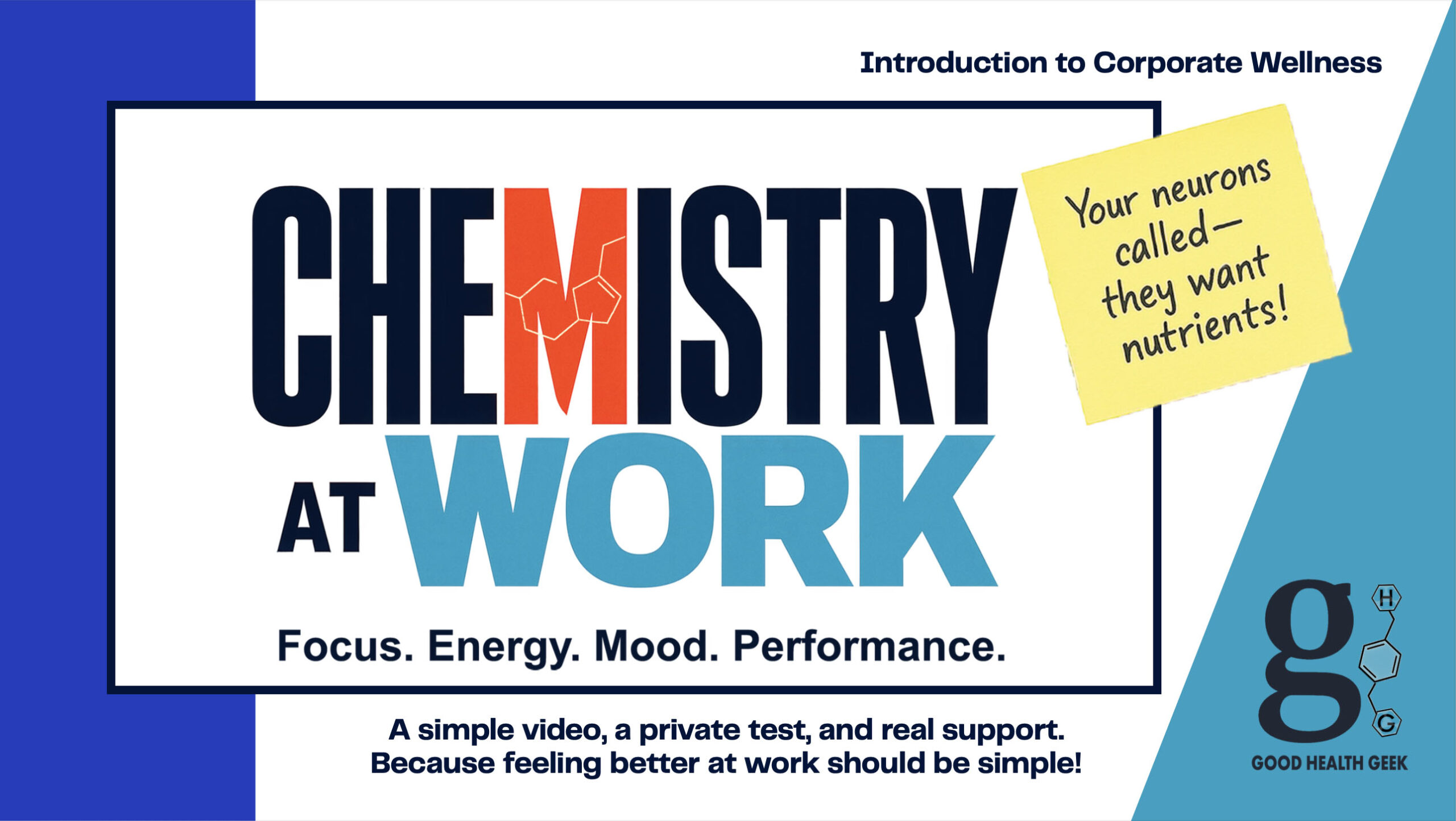
Program Overview Deck
A visual overview of Chemistry at Work, including the core concept, structure, and overall experience.

Program Packages Summary
A concise resource designed for quick review and easy internal sharing with leadership or decision-makers.

Program Structure Guide
A breakdown of what’s included in the experience, from the discovery session to supporting resources.
Collateral & Shareable Resources
Additional materials that support review, communication, and internal discussions.

Evidence-Based ROI
A concise summary of major research findings showing how workplace wellness initiatives can generate measurable economic returns.

HR Leave-Behind
A simple downloadable resource useful for forwarding, saving, or including in internal review discussions.

The Value Equation
A clear breakdown of how modest improvements across a workforce can generate measurable economic value.
Research & White Papers
Science-based materials connected to the broader ideas behind Good Health Geek.
Food, Brain, and Performance
A published SSRN paper exploring how food choices may influence energy, focus, mood, and daily functioning.

Rethinking Workplace Performance
Explores the biological foundations of workplace performance, examining how nutrition, physiology, and brain chemistry influence energy, focus, resilience, and consistency.
Research Library
Explore the broader collection of studies, white papers, and scientific framework pages connected to Good Health Geek.
Research foundations behind the framework
Chemistry at Work is built around practical education connected to biological systems that influence energy, focus, stress response, and day-to-day cognitive consistency.
Stress & Cognitive Load
Stress can influence attention, working memory, decision-making, and emotional regulation, especially when the nervous system remains activated for long periods.
Nutrition & Brain Function
Food patterns, blood sugar stability, hydration, and nutrient intake may affect energy, focus, mood, and resilience throughout the workday.
Fatigue & Operational Consistency
Fatigue, sleep disruption, and cognitive overload may contribute to variability in focus, stamina, communication, and day-to-day reliability.
Roll-Out, Implementation, & Practical Resources
Helpful materials that explain how the program works in practice.
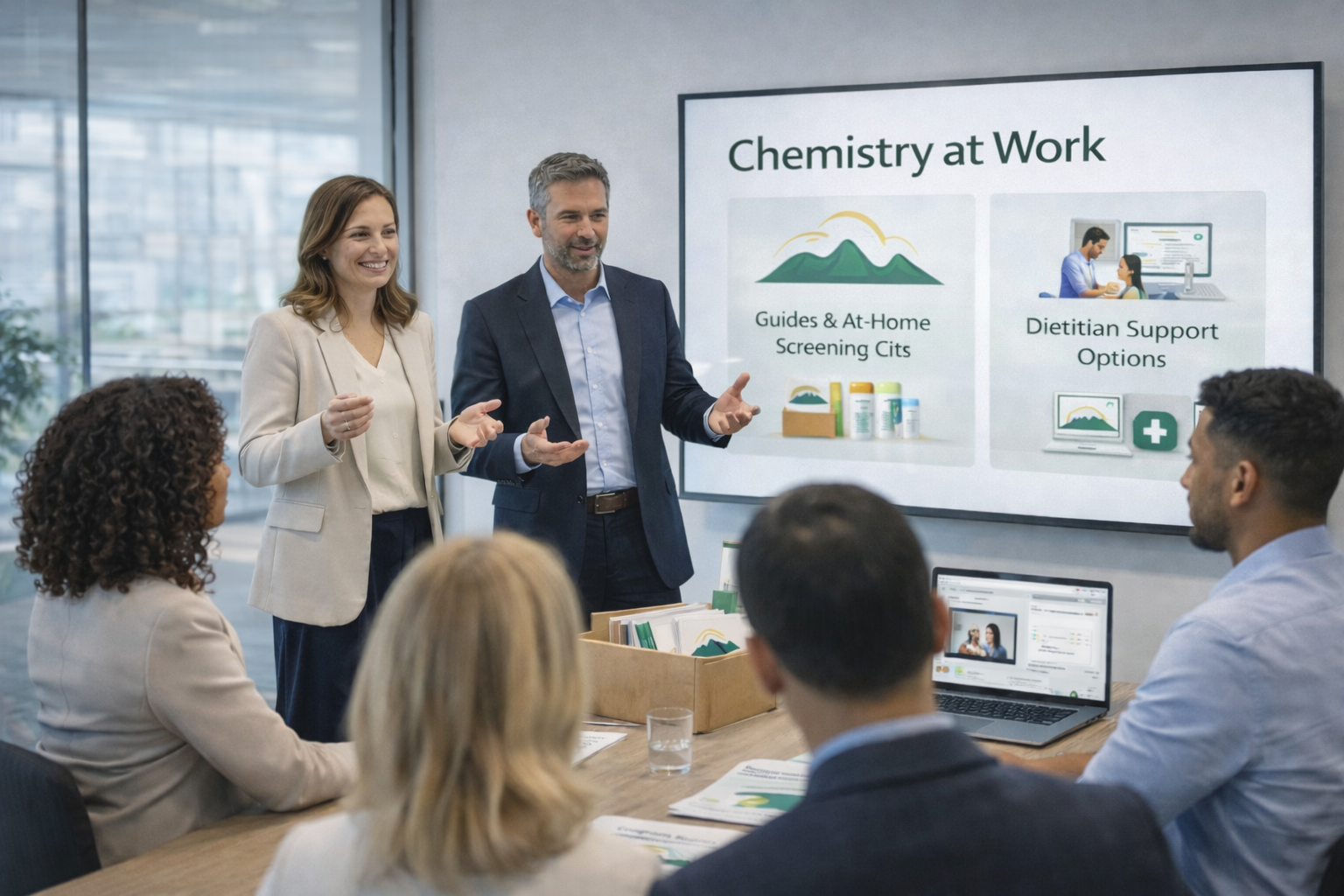
Roll-Out & Implementation Overview
A practical guide explaining how the program is introduced, activated, and rolled out within an organization.

Privacy Overview
An explanation of the privacy-first structure of the program and how employee information is handled and protected.

What Makes Us Different
The ideas, structure, and design approach that distinguish Chemistry at Work from typical workplace wellness initiatives.
What implementation typically looks like
A simple rollout pathway helps organizations understand how Chemistry at Work can move from review to internal launch.
Fit Review
Discuss organization goals, workforce needs, and whether Chemistry at Work is a good fit.
Rollout Planning
Review HR materials, communication timing, internal stakeholders, and launch pathway.
Employee Launch
Employees receive access to the discovery session, educational materials, and supporting resources.
Ongoing Support
Organizations may use reinforcement materials, check-ins, optional screenings, and continued education assets.
Need something specific?
If there is a particular resource you’d like to review and it’s not listed here, feel free to reach out. Additional materials may be available depending on your organization’s needs.