

Education + Testing + Support
Specialized nutritional testing provides private insight. Practical education builds understanding. Access to registered dietitians helps participants turn that knowledge into informed choices, with dedicated learning available for first responders and emergency services.
THE PROGRAM
Chemistry at Work™
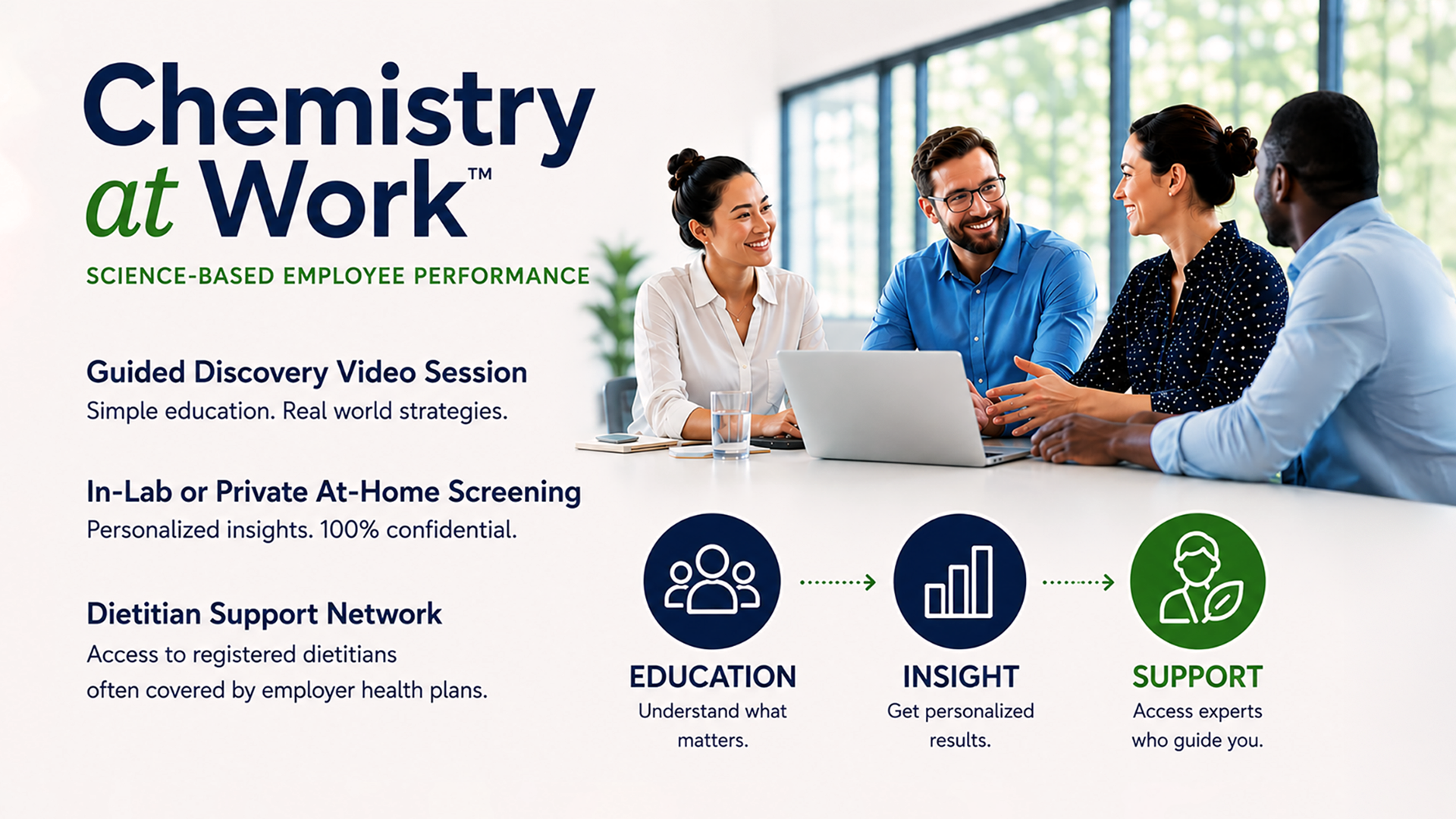
A workforce wellness program combining specialized nutritional testing, practical biological education and access to registered dietitians.
ONE PROGRAM. FLEXIBLE LEARNING.
Built around the employee experience.
Employees gain private insight into their nutritional needs, learn how biology influences everyday health and performance, and can connect with registered dietitians for individualized nutrition guidance.
Organizations can choose the learning experience that best fits their workforce while keeping the broader Chemistry at Work™ program intact.
INCLUDED WITH EVERY LEARNING PATH
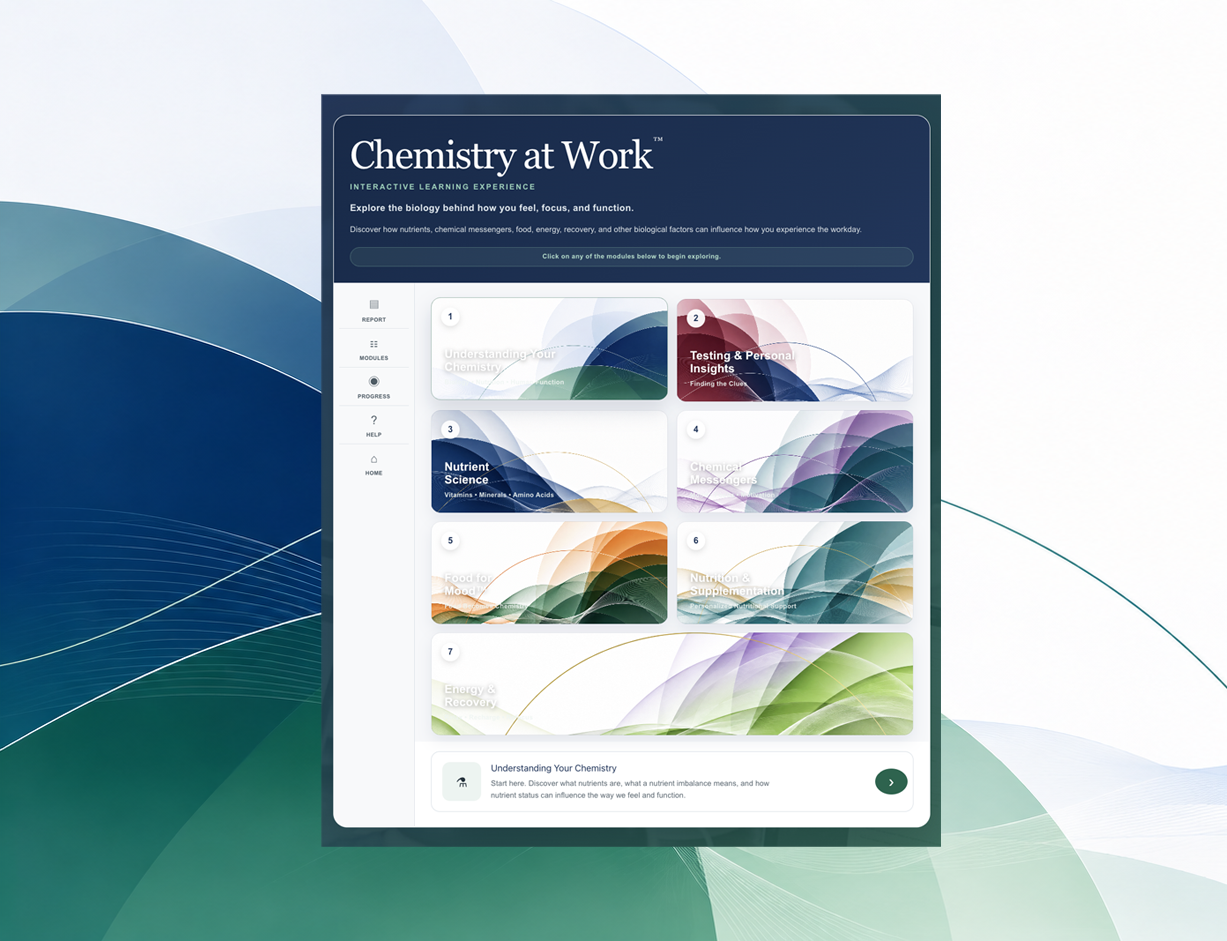
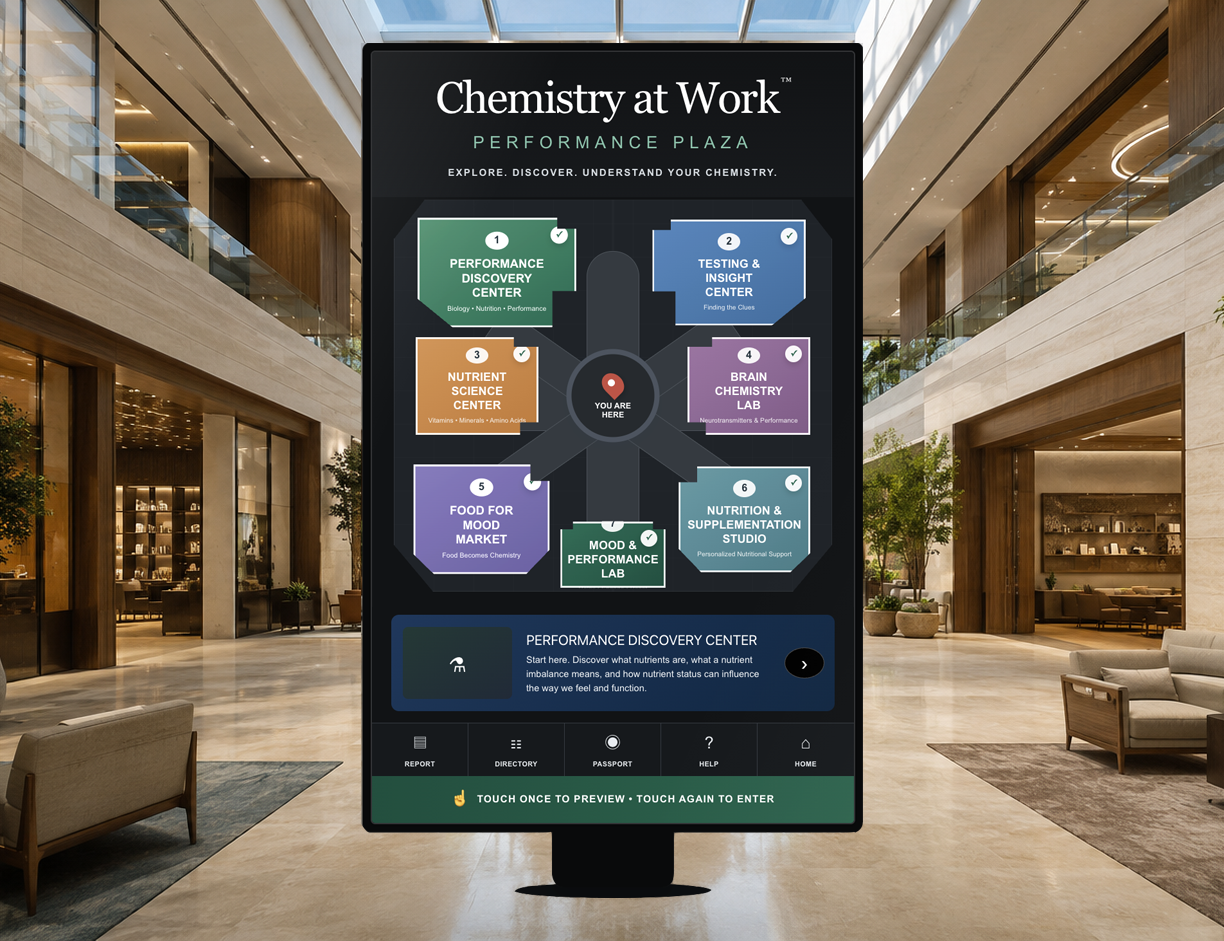
Manager Insight Module
Every learning experience includes a dedicated module for managers, providing practical context around the biological factors that can influence employee energy, focus, recovery, and performance.

INDIVIDUALIZED NUTRITION SUPPORT
Connect with a registered dietitian.
Participants access our dietitian networks through the program portal and book directly with a provider for personalized nutrition guidance, including discussing their testing results. Appointments take place through the provider’s own service, with insurance accepted where applicable. The provider confirms network participation and coverage before the visit.
Explore the ProgramThe new workforce performance landscape
A New Conversation Around Workforce Performance
Modern workplace performance is influenced by far more than motivation alone. Focus, resilience, stress load, cognitive fatigue, and daily human consistency are becoming operational concerns across modern organizations.
Employee engagement is declining
When employees are present but disconnected, productivity, communication, and day-to-day consistency quietly suffer.
Burnout and stress remain elevated
Stress overload affects focus, resilience, mood, and the ability to sustain performance through the workday.
Cognitive strain is becoming operational
Attention fatigue, decision overload, and mental exhaustion are no longer just personal issues. They affect reliability.
Traditional wellness often stays surface-level
Many programs promote awareness, but fail to connect biology, daily behavior, and practical workplace support.
The next shift is workforce performance through human consistency
Chemistry at Work™ helps organizations support focus, energy, mood, and resilience through education, private insight pathways, and simple ongoing engagement tools.
Built to keep momentum visible
Designed for Sustained Engagement
Chemistry at Work™ was intentionally developed as a multi-touch engagement system designed to help organizations maintain visibility, reinforce awareness, and support long-term participation beyond the initial rollout.
Executive Briefing
U.S. Workforce Performance Briefing
Explore the emerging biological factors influencing workforce performance, consistency, engagement, resilience, and productivity.
Read the Briefing